Merlin Bobb's warning about Black-owned labels, and why the math finally favors the founders.
Near the end of his Mixed and Mastered conversation with Jeffrey Sledge, Merlin Bobb stops telling stories and starts making a case. Atlantic was an independent. Elektra was an independent. Geffen was an independent. "Do you notice how all those labels are still around," he asks, "but all ours are gone?"
He would know. Bobb ran A&R at Atlantic, co-founded EastWest Records with Sylvia Rhone, and spent a decade as head of A&R at Elektra. He sat inside the machine during the years Black music became its main engine. And he watched the Black-founded labels around him get bought, folded, and filed away.
The record backs him up. Mostly. The nuance is where the lesson lives.
The ones that stayed
Ahmet Ertegun and Herb Abramson started Atlantic in 1947. Twenty years later they sold it to Warner Bros.-Seven Arts for $17.5 million, a price the partners later admitted was too low. Jac Holzman launched Elektra in 1950 from a college dorm room with $600 between him and a partner, then sold it to Kinney in 1970. David Geffen started Geffen Records in 1980 and sold it to MCA a decade later for stock reportedly worth more than half a billion dollars.
Every one of them sold. That's the part of Bobb's argument people skip. The founders cashed out. The brands didn't. Atlantic, Elektra, and Geffen lived on as front-door labels inside the majors, with their own staffs, their own rosters, and their own logos on the spine.
The ones that didn't
Now run the same exercise on the labels Bobb names.
Stax lost its catalog before it lost its doors. A 1965 distribution contract Jim Stewart signed without reading gave Atlantic the rights to the Stax recordings it distributed. When Atlantic sold to Warner in 1967, Warner kept the masters. Jerry Wexler later put it plainly: "Jim was screwed." Stax was forced into bankruptcy in December 1975.
Berry Gordy sold Motown to MCA and Boston Ventures in 1988 for $61 million. Sony owns the entire Philadelphia International catalog, completed when it bought the post-1975 recordings in 2014. LaFace launched as a joint venture with Arista in 1989, was fully acquired in 1999, and was absorbed into RCA in 2011. So So Def has cycled through roughly nine distributors in 33 years.
Some of those names still exist. Motown is a working label inside Universal. Fair. But the pattern holds. The white-founded indies were bought as institutions. Too many of the Black-founded ones were bought as catalogs.
The executives went with them
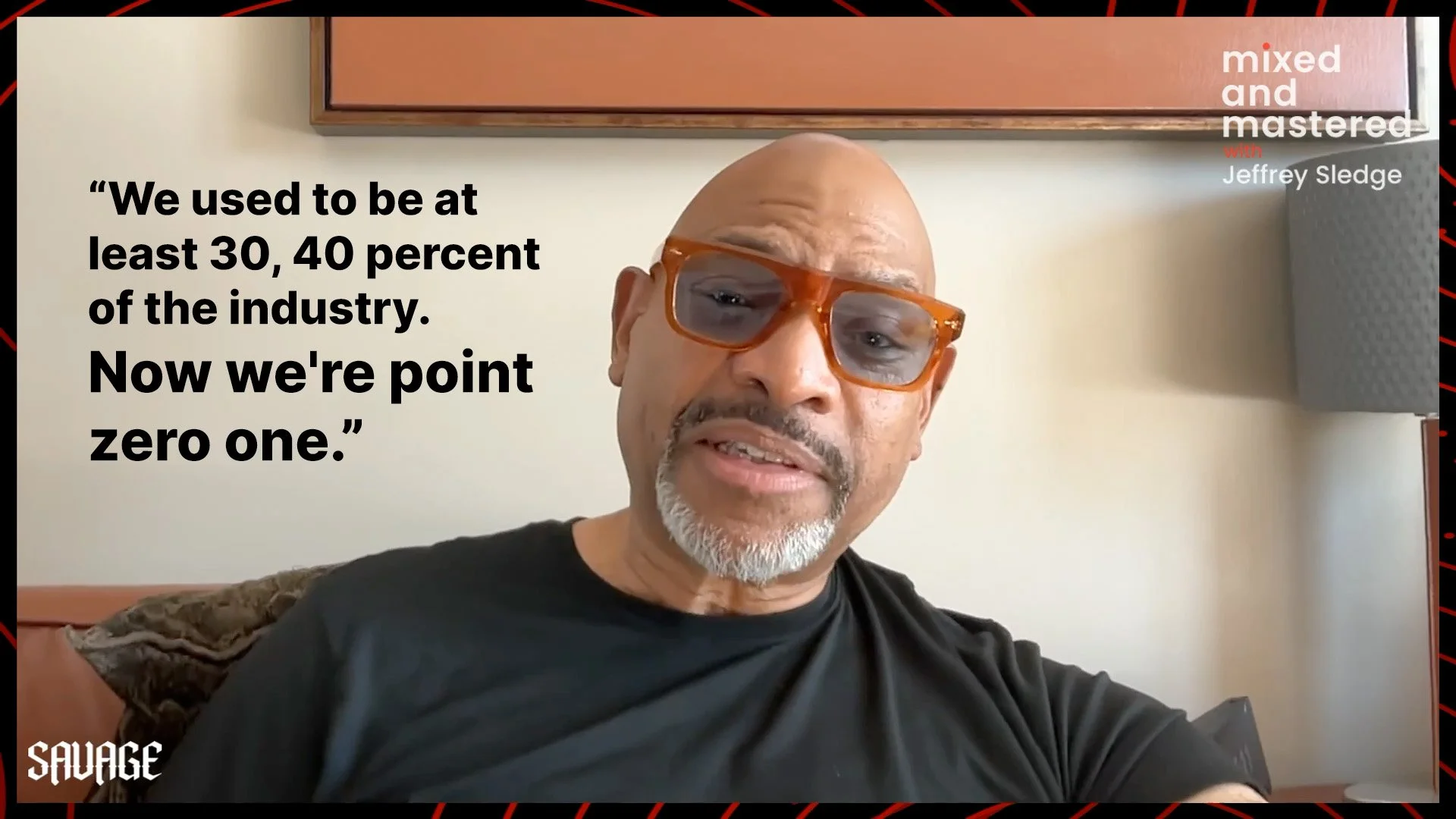
Bobb's second point stings harder. "We used to be at least 30, 40 percent of the industry," he says. "Now we're point zero one."
That's hyperbole, and he knows it. But it's not off by as much as you'd hope. A 2021 USC Annenberg study of 4,060 executives across 119 music companies found Black executives held just 4.2 percent of top leadership roles at 70 major and independent companies. That's the same business where Black artists set the charts, the slang, and the sound.
The link isn't hard to draw. When a Black-owned label folds into a major, its executives become employees. Employees get restructured. Owners don't.
The gate is open
Here's where Bobb turns optimistic, and he's right to.
Independent is no longer the minor leagues. MIDiA Research put independent labels and artists at 46.7 percent of global recorded music revenue in 2023, about $14.3 billion. Distribution that once required a major now lives in a dashboard. "You can go on AI and start a record label today," Bobb says. Sledge lands the punchline: the gates are open, and you don't need Freddy to let you in at the door.
Our take
Bobb's lesson isn't "never sell." Ertegun sold. Holzman sold. Geffen sold. They got rich, and their labels outlived the checks.
The lesson is what you sell, and when. Sell distribution. Sell a minority stake. License. Keep the masters and keep the name until the name is worth more than the catalog. Read the contract Jim Stewart didn't. Stax is the cautionary tale. Atlantic is the blueprint. Same era, same deal, opposite sides of it.
Bobb spent his career watching what he calls the plain truth, that American music is Black music, while the Black-owned share of the business shrank. His ask to the next generation is simple. Build something that's still standing after you leave the building.
Listen to Merlin Bobb on Mixed and Mastered, wherever you get your podcasts.