Mixed and Mastered Returns on September 16th
Lil' Kim walked out of the booth angry.
She had just cut her verse on "Another," the back-and-forth with Biggie that opens with a shot so pointed people have argued for thirty years about whether either of them meant it. Jacob York says they did. He was there. Kim wrote the whole thing, meant every word, and left the session without saying much beyond that she would deal with him later.
Biggie's reaction, per York, was not defensiveness. It was respect. He had been too close to her to hear it before. The record is where he started.
That story sat unspoken for three decades. It came out on a podcast, in hour two, because the man asking the questions had spent his own career in those same rooms and knew what to ask.
Sixteen months, fifty-nine conversations
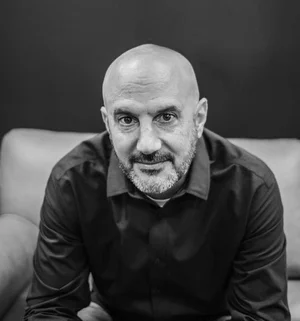
Jeffrey Sledge was VP of A&R at Atlantic. Before that, Jive. He signed artists, broke records, and watched the business rewrite itself from a seat inside it. When he started Mixed and Mastered in March 2025, the idea was small. Call the people he came up with. Turn on the mics.
It still works that way. What changed is what it adds up to. Fifty-nine episodes in, the passion project became a record. Living memory of how this business actually got built, kept by the people who built it. And the reach ran well past Jeffrey's phone book.
The show's premise is stated plainly on its own page: there's a gap in how music stories get told, and Mixed and Mastered exists to close it. One honest conversation at a time.
Season One is what closing that gap looks like.
What came out
Scoop Jackson was in the room when XXL was invented. Not a conference room. A bar. The concept went down on a napkin. He had already helped build SLAM into a magazine that covered basketball as culture rather than sport, and he came up studying hip-hop as a communicative force before the academy would touch it. He is currently co-writing Grandmaster Flash's memoir.
Faith Newman was one of the first five employees at Def Jam. She co-executive produced Illmatic. She signed Nas, Jamiroquai, and the Isley Brothers. Four decades in, she runs on what she calls a strict no-asshole policy. She came back for a second episode to talk about the one artist she desperately wanted and could not get.
Matty C ran Unsigned Hype at The Source and put Biggie, DMX, Mobb Deep, and Common in print before anyone was listening. He also sat for a chapter titled "The Ones That Got Away: Jay-Z and Eminem." That is not a flattering conversation to agree to. He had it anyway.
Caron Veazey managed Pharrell for the better part of a decade and worked MCA, Epic, RCA, Island Def Jam, and global marketing at Sony. She got into the business through NBC's Saturday Night Live. Her credits include the Rage Against the Machine and Wu-Tang tour, Christina Aguilera's Stripped era, and "Happy."
Julia Beverly built Ozone into the definitive voice of Southern rap from outside a New York-run industry. Her relationship with Pimp C ran three acts. She interviewed him in prison, documented his release, then wrote his biography.
Emil Wilbekin shaped the voice of Vibe during hip-hop's golden era and talked about what it meant to do that as an openly gay Black man in an industry that was not built to welcome him. Fuzzy West went to school with Snoop and Warren G, then went from Compton to Power 106 to the front office at the new Death Row, with a detour through an afternoon with Michael Jackson in Vegas.
Some guests needed two episodes. Dante Ross, Lisa Cambridge-Mitchell, Datwon Thomas, and Jacob York all got a part one and a part two, because the alternative was cutting the good part.
Then the rest of the roll. Wendy Day on ownership. April Walker on streetwear. Grace Harry on steering Usher through a career pivot. Joseph Patel from Sundance to Oscar night. Sean C, DJ Enuff, Rocky Bucano, Dyana Williams, Steve Carless, Max Gousse, Ian Burke, Mickey Factz, Rene McLean, Dr. Jason King, Paul Stewart, Rob Markman, Angelique Miles, Vivian Scott Chew, Whitney-Gayle Benta, O'Neal McKnight, Dr. Denise J. Brown.
Executives, producers, songwriters, managers, journalists, attorneys, stylists, professors. The people who built the culture and almost never get asked about it.
The reviews all say the same thing. "Well done Jeff Sledge," one listener wrote. "Great guests dropping lots of fun stories and true insights." Five stars on Apple Podcasts, with an audience that shows up for hour-long conversations that have no hooks and no gimmicks.
Season Two opens with a man who kept his label
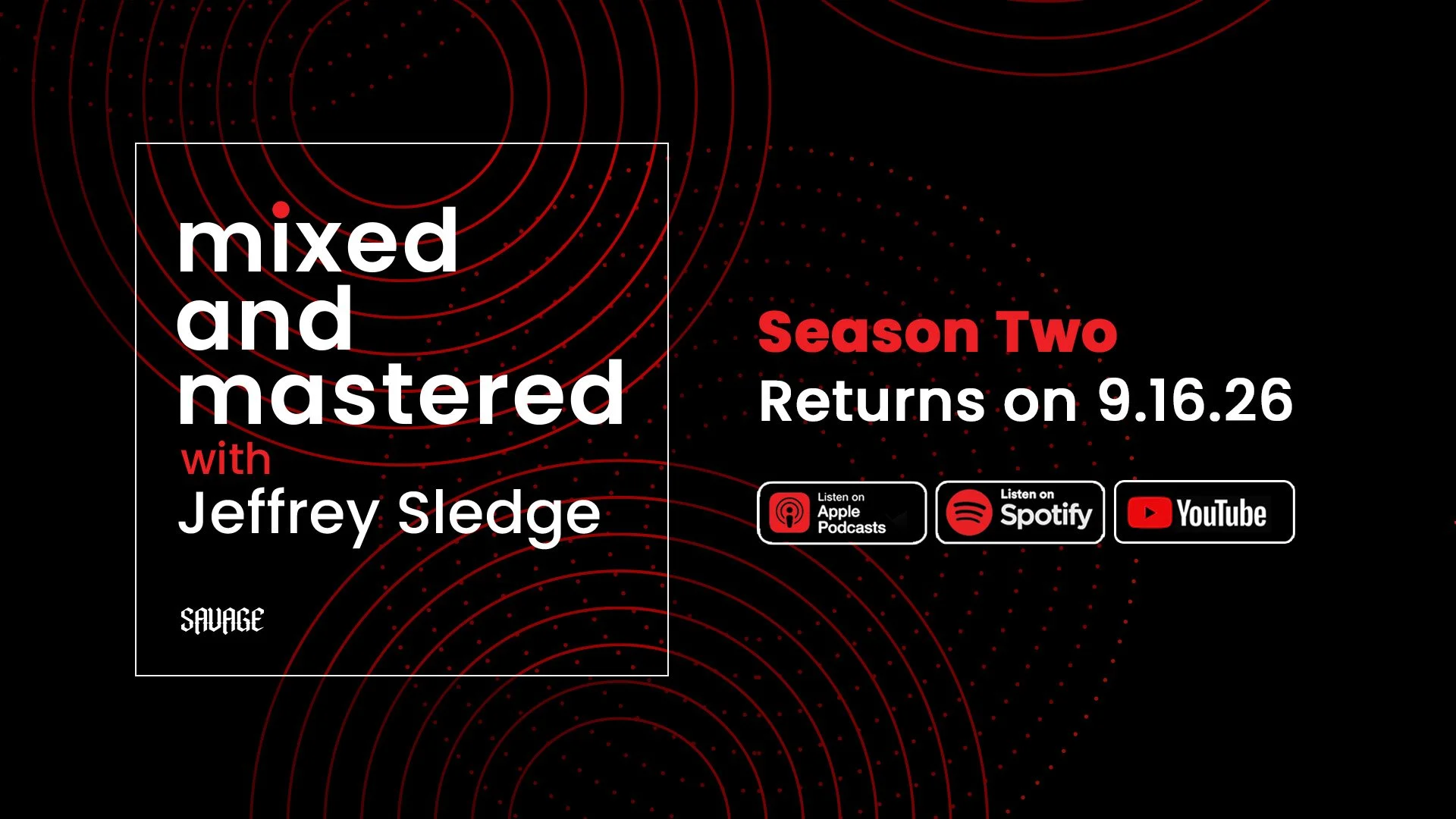
Mixed and Mastered returns Wednesday, September 16, with Mike Ross.
Mike Ross started Delicious Vinyl out of Matt Dike's apartment in 1987 with no artists, no plan, and a name lifted off a sandwich shop business card. He found his first rapper by calling the record pool and asking if anybody knew one. Somebody's cousin did. Ross cold-called the number, heard the voice that answered, and that was the decision. "He sounded like Barry White as an MC." That was Tone Lōc. "Wild Thing" came next, behind a video that cost $500 because the director shot it as a favor before she'd ever made a rap clip. Nearly four decades later Delicious Vinyl is still independent, which in this business beats any chart position.
He also gets into signing The Pharcyde off a three-song demo, stopping the tape one line into "Passing Me By." What he didn't know was how many labels had already passed on it. Including the one Sledge was working for at the time. "How can you pass on them?" Ross asks him, on Sledge's own show. "That demo was undeniable."
Producer, engineer, label founder, survivor. Exactly the kind of career this show was built for.
Behind him this season: Chris Atlas, who started as a Tommy Boy intern in 1995 and has run marketing at Def Jam, served as EVP of Urban Music and Marketing at Warner Records, and now sits as president of Fat Beats. Tracey Waples, former SVP of Marketing at Def Jam and founder of DNA Creative. More names to come.
From the host and EP
Jeffrey Sledge, host: "I started this to catch up with my friends. Then I realized nobody had ever asked them these questions. Fifty-nine episodes in, I'm still hearing things I never knew, and I was in the building. These are the people who actually built this. They deserve more than a footnote. Season Two, we go deeper."
Tom Frank, executive producer: "Season One proved the appetite. People want the real version, told by the people who lived it. Jeff has the relationships and the recall, and he asks the question everybody else skips. What started as his conversation belongs to a lot more people now. Season Two is us treating it that way."
Listen
Season Two of Mixed and Mastered premieres Wednesday, September 16, 2026, with Mike Ross. The full Season One archive is at besavage.co/mixed-and-mastered. Available on Apple Podcasts, Spotify, YouTube, and wherever you listen.
Mixed and Mastered is produced and distributed by SAVAGE.