Everybody Speaks For Culture. Bun B Wants Somebody to Speak To It.
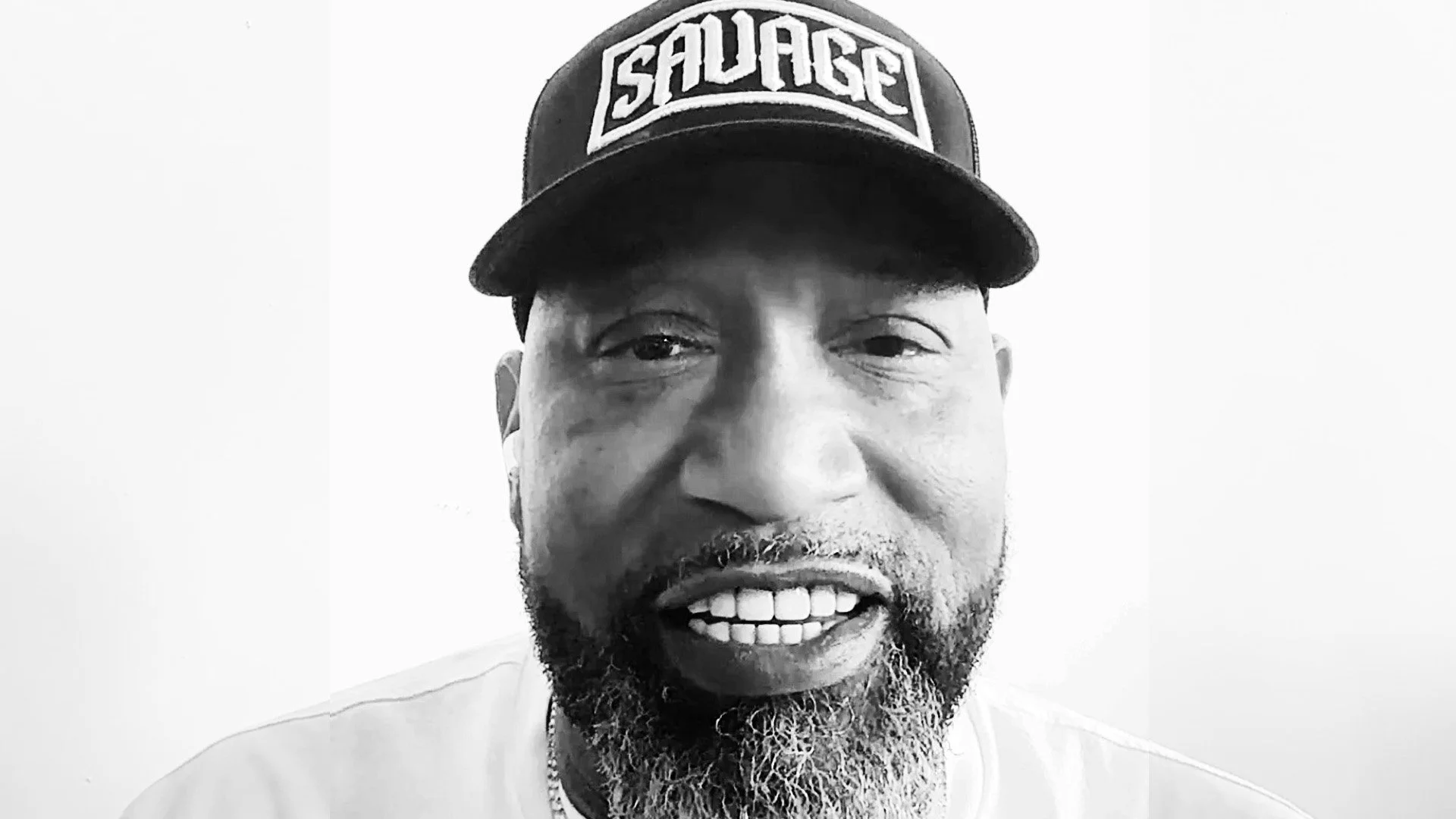
About nine minutes into the Unglossy season premiere, Bun B changed one word and took down half the media industry.
The show had just announced that Merrick Studios was acquired by SAVAGE. Tom Frank had walked through the deal, the five shows, the promise that nothing changes for listeners. Robert Stout, the race car driver sitting in the same room as a Port Arthur rap legend for reasons that would become clear, had said his piece about industries needing to cross-pollinate.
Then Bun leaned in.
"I've done tons of podcasts, and everybody likes to talk about how they represent culture, and they speak for culture. But they never speak to culture. They never give culture a pure voice on their platform. That's what's cool about this, because this one starts by listening to culture. And that's how we make sure that culture gets seen, heard, and represented."
Speak for. Speak to. Two letters apart, and two completely different companies.
The difference between a microphone and a megaphone
Speaking for culture is a posture. It requires no permission and no relationship. You decide what the community wants, you say it loudly, and you bill a brand for the reach. The community is the subject of the sentence, never the speaker.
Speaking to culture means the community is in the room. It can answer back. It can tell you that you got it wrong. That is a harder business to run, because it means the thing you make is downstream of the thing you heard, not the other way around.
Almost every media company claims the second and operates the first. They hire a culture editor, license a soundtrack, borrow a vernacular, and point the whole apparatus at an audience that had no say in any of it. The audience notices. Audiences always notice.
Bun B has receipts on this
This is not a theory Bun picked up in a conference room. It is the story of his career.
Thirty years ago this summer, UGK released Ridin' Dirty on Jive Records. No official singles. No music videos. No radio push. By the industry's own logic, an album like that does not exist. It debuted at number 15 on the Billboard 200, number 2 on the R&B/Hip-Hop chart, went gold, and has moved north of 850,000 copies. Pitchfork later gave it a 9.5. RapReviews gave it a 10. It became the foundation record for Southern hip-hop and the reason Houston got taken seriously.
Nobody spoke for that album. The industry barely spoke about it. Culture found it, carried it, and made it permanent. That is what happens when the work is aimed at people instead of at a marketing plan.
Bun has spent the thirty years since building things the same way. He co-taught "Religion and Hip-Hop Culture" at Rice University as a distinguished visiting lecturer alongside professor Anthony Pinn, across three separate years. He co-founded Trill Burgers, which Good Morning America named the best burger in America in 2022, and which now runs multiple Houston locations, a fourth season with the Houston Texans, and, as of this fall, a spot on the Rice campus where he used to lecture. He called that one full circle.
The through-line is not celebrity licensing. It is a man who keeps showing up in the room where the thing is actually made.
The numbers say the audience is already here. Ownership isn't.
Here is what makes Bun's line more than a nice sentiment. The data has been screaming it for years.
Black adults spend roughly 23 hours and 26 minutes a week on mobile apps and browsing, about two hours more than the U.S. average. In podcasting specifically, Black listeners post 73% brand recall against 70% overall, and 54% say they are more likely to buy a product when a favorite host mentions it. Black consumer buying power is projected to reach an estimated $2.1 trillion by 2026.
The listening is not passive either. Pew found that 61% of Black podcast listeners cite learning as a major reason they tune in, and 40% listen to stay current on events, against 28% of both White and Hispanic listeners. Race and ethnicity content draws 43% of Black listeners, compared with 19% of Hispanic and 9% of White listeners. Three-quarters say they hear news discussed on podcasts.
So the audience is bigger, more engaged, more commercially valuable, and more deliberate about what it consumes. And yet, as Axios reported this spring, Black and Latino audiences are among the fastest-growing forces in podcasting while distribution and monetization stay concentrated in a handful of platforms. Juleyka Lantigua, who founded LWC Studios, put it plainly: "Ownership is destiny. The only way to secure a long-term future for an idea is to own the means of production and distribution."
That gap is the entire problem Bun is describing. An industry perfectly happy to speak for an audience it has no intention of handing the keys to.
What listening first actually looks like
The reason Bun says "this one starts by listening" is that SAVAGE is built backward from the usual model.
Most media companies start with what is trending on top of a community and chase it. SAVAGE starts with audience intelligence, what the community is actually reaching for underneath, and lets that decide what gets made. Then it makes the thing, brings in the brands that want to be in that room, and feeds the results back in. Every cycle knows more than the last.
It is the difference between reading the comments and running the survey. One is reactive. The other is a system.
And it explains the strangest thing about the episode itself. A race car driver, a rap legend, and a longtime music executive in one conversation is not a booking accident. SAVAGE works across five worlds: motorsports, extreme sports, music, military and veterans, arts and culture. If your premise is that you find what a community is reaching for, then the communities multiply, and the rooms start connecting to each other.
The part that makes it real
Bun said something else in that same stretch, and it belongs right next to the first quote.
"It's not just that we're partnering with SAVAGE and we're creating with SAVAGE. We own a piece of SAVAGE now. We get to literally sow into this company and build with this company, and at the end of the day, we profit with the company."
That is the answer to Lantigua's point. Speaking to culture is a value. Owning the platform is the enforcement mechanism. Without the second, the first lasts exactly as long as the next quarterly review.
The test
Here is a clean one for any brand, network, or platform that says it stands for culture.
Ask what you learned from your audience last quarter that changed what you made. Not what you posted about them. What they told you that you did not already believe, and what you did about it.
If you can answer that, you are speaking to. If you cannot, you have a megaphone and a mood board, and the audience already knows.
Bun B has been on the other side of that microphone since 1996. He knows the difference by sound.
Hear the full conversation on Unglossy with Bun B, Jeffrey Sledge, and Tom Frank. Available on Apple Podcasts, Spotify, and YouTube. Produced and distributed by SAVAGE.