Kanye's First Magazine Cover Came From a Marketing Agency
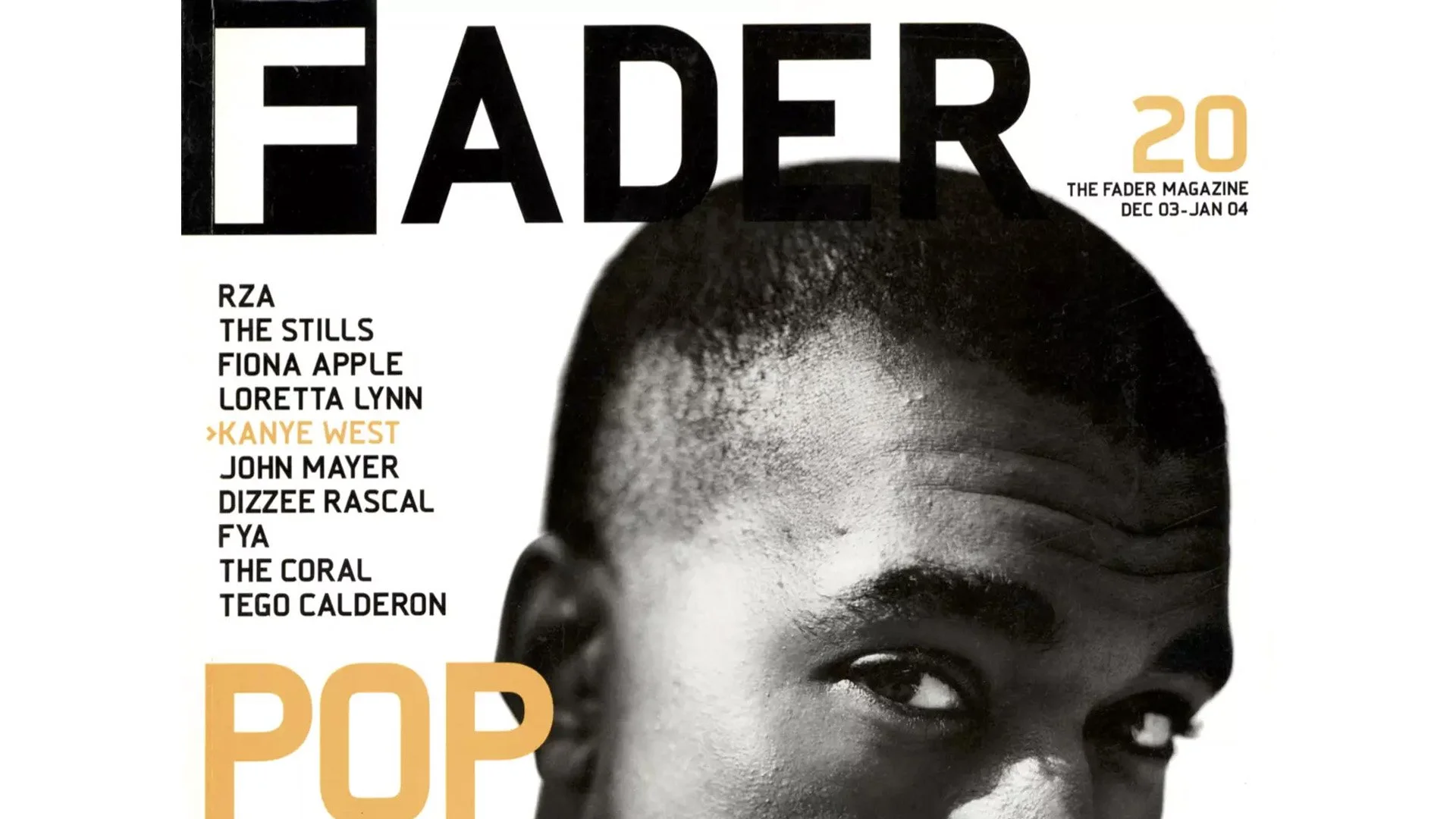
December 2003. Kanye West is the guy behind the beats on The Blueprint. Everybody knows the production. Almost nobody is betting on the rapper. The College Dropout is still two months away.
Then a magazine puts him on the cover. Not The Source. Not XXL. Not Rolling Stone.
The FADER.
The FADER wasn't a legacy publisher. It started as a side project of a promotion company called Cornerstone.
Chris Atlas was inside that building. On Mixed and Mastered, he told Jeffrey Sledge: "We were a big part of Kanye's College Dropout album. FADER was Kanye's first magazine cover."
He's right. Here's how it happened.
Two friends, one agency
Rob Stone launched Cornerstone in June 1996 after years working records at major labels. Jon Cohen, his best friend since seventh grade, came on as co-CEO. The idea was simple. Labels needed their records worked to radio and DJs. Cornerstone would do it independently, and do it across hip hop and alternative at the same time.
Chris came over from Tommy Boy around 2000. His description: "the preeminent independent marketing and promotion company."
The mixtape that made you official
The engine was the Cornerstone mixtape. A regular CD of new label music, mixed by DJs like DJ Premier, Mark Ronson and DJ Khaled, and mailed straight to the programmers and tastemakers who decided what broke.
For a label, getting on it was currency. "It was part of the record label's marketing plan," Jeffrey remembers from his A&R days.
For a DJ, it was a promotion. "If you did the Cornerstone mixtape, you made it," Chris says. "You were official. You were on a national level beyond your city."
And records broke off it. No algorithm. No playlist pitch. Just a CD in the right hands.
A magazine built for DJs
In 1999, Stone and Cohen launched The FADER. Cohen has said the first goal was to "show the DJ community more about the projects we are working on."
It didn't stay a promo sheet. The New York Times later called it "the new music-and-fashion bible."
Now look at what sat under one roof. The DJ network. The editorial platform. And the brands. Sprite, Reebok, Boost Mobile and Xbox were all Cornerstone clients, and Jeffrey still remembers the office looking like a showroom. Cornerstone could introduce an artist to DJs, to readers and to a sneaker company in the same month.
The freestyle in Rob Stone's office
The cover didn't come from a publicist's pitch. According to The FADER's own history, editor-in-chief Knox Robinson caught Kanye freestyling in Rob Stone's office. That turned into an interview at a Boston Market, Kanye's pick. That turned into the cover.
Robinson's read on what Kanye wanted: "the kid wanted to be recognized as an artist, my man wanted to be seen as a lyricist, a rapper."
The FADER gave him that before anyone else did. Two months later, The College Dropout debuted at No. 2 on the Billboard 200 and went on to win the Grammy for Best Rap Album.
Chris stayed close to it. When he got to Def Jam years later, the relationship came with him. He remembers riding in Kanye's car on the way to a rehearsal, hearing music "before the world heard it." His summary of Kanye: "incredibly driven. Highly creative. Passionate."
Then vs. now
The Kanye cover is a great story. The structure behind it is the real lesson.
Cornerstone picked what mattered and put it in front of people. DJs, readers, brands. That was curation from the top down, and it worked.
In the episode, Chris and Jeffrey land on how that flipped. "We curate it for the people," Jeffrey says, "but now the people are curating." Chris finishes the thought: "They're curating for us."
That's why Chris, now president of Fat Beats, keeps pushing artists to build like a business. The gatekeepers who once put you on a cover are fewer. The work of connecting, show by show and fan by fan, is yours.
Rob Stone died in June 2024. He was 55. The mixtape, the magazine and that cover are still part of how hip hop remembers the early 2000s.
Hear Chris tell the whole story on Mixed and Mastered with Jeffrey Sledge.