The Club Couldn't Have a DJ. So the DJ Went on Camera.
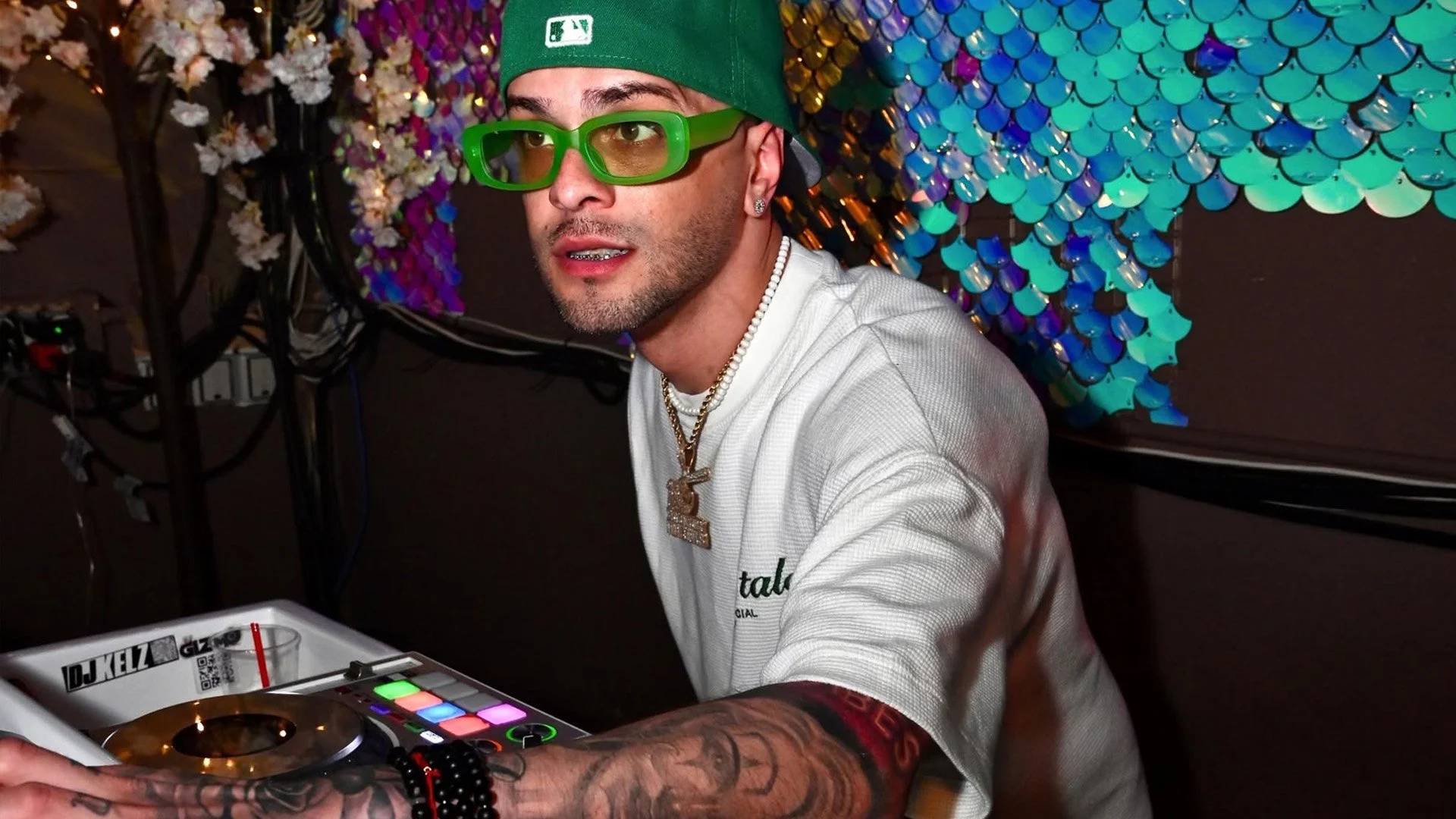
A family in Coro King's chat wanted him for Thanksgiving. Not at a venue. At their house, on a screen, while the turkey went around.
"Yo, Coro, we're gonna watch you for Thanksgiving, my whole family," he says on this week's episode. They texted shout-outs. He played the hits. Camilo heard it and said the quiet part out loud: "He has a booking at someone's Thanksgiving dinner. That's a booking as part of the calendar."
It's a funny line. It's also the most important business idea in the episode.
The room got bigger. The door moved.
For most of DJ history, the career ladder was a straight line. Promote. Get in a club. Get on the radio. Maybe produce. Kast One laid it out on the show and then asked the question every working DJ is thinking: if we're not on the radio and we're in the club, are we failing if we're not streaming too?
Coro's answer: not really. The people watching his streams aren't the people in the club. "They're older. They have families. They can't really go out, so they enjoy you at their crib."
That's not a replacement audience. It's an extra one. People who love the music and aged out of 2 a.m. Coro says some of them fly in, get a hotel, and show up at the club. The stream feeds the gig. The two work together.
The platforms finally built a turnstile
The reason this is a real business now, and not just a pandemic habit, is that the platforms got the rights sorted.
DJ streams blew up during COVID and then ran into copyright strikes. The guys on the show remember Instagram Live "kicking us out." Twitch had the same problem until summer 2024, when it launched its DJ Program with Universal, Sony, Warner, and hundreds of independent labels. Monetized DJs share stream revenue with rights holders, and Twitch covered a bigger share of that cost at the start. Twitch CEO Dan Clancy didn't sugarcoat why: "The status quo on Twitch was not sustainable, and any viable future for the community required we find a solution." (Sources: MusicTech, https://musictech.com/news/industry/djs-on-twitch-can-split-revenue-with-labels/ and Mixmag, https://mixmag.net/read/twitch-djs-pay-revenue-to-record-labels-news)
Coro walks through his own math on the show. Out of a DJ channel sub, a cut goes to the labels, a cut goes to Twitch, and he says he keeps about $2.50. Gifted subs are fans paying for other fans to watch. It's a cover charge that a stranger picks up.
TikTok LIVE works on gifts. A rose is one coin. A lion is 29,999. Coro puts a lion at $400 to $500, and that lines up with what a viewer pays when coins run about a penny and a half each. What the creator actually banks is a lot less. Third-party breakdowns estimate roughly half the value disappears when gifts convert to diamonds, which puts a lion closer to $75 in the streamer's pocket. TikTok doesn't publish the rates.
So when Coro says he was clearing about five stacks a week back in 2023, picture how much his chat was spending to get there.
The rules keep moving
Coro also flags the catch. "US bought it, so there's a lot of rules." He's right about the ownership part. TikTok's US joint venture, with Oracle, Silver Lake, and MGX holding 45%, closed on January 23, 2026. His lived version is AI moderation that suspends you for a curse word. That's why he keeps the wild nights on Twitch, where the rules are looser.
And he's clear on the biggest risk. Not moderation. Disappearing. "There's a lot of DJs that dedicate to TikTok, but they lose their brand. They lose their outside brand. They don't get bookings no more." The platform wants you on every day, and it makes money when you're live. Coro streams four and a half hours on a random Tuesday and still guards his club calendar.
Full circle: the basement camera
Here's where Coro's story loops back.
Before streaming was a business, he was already doing it in Providence. Lots of small bars and lounges there couldn't get an entertainment license, so the DJ played downstairs on a camera and the crowd upstairs watched. When the license board came through, the DJ disappeared. One night that meant hiding in the freezer with the equipment. "Ice cold."
Providence is working on it. In November 2025, a City Council committee advanced changes to the city's entertainment rules that widen "incidental entertainment" for smaller venues, meaning multiple musicians, plugged-in instruments, and dancing. Council President Rachel Miller: "Providence's food, beverage, music, and hospitality landscapes have evolved, but the rules have not kept pace."
The freezer was a workaround for a room that wasn't allowed to exist. The stream is the same instinct at scale: if the door is locked, build a different room. The difference now is that the platforms have licensed it, the audience pays to be there, and some of them call you for Thanksgiving.
The takeaway for working DJs
Streaming isn't mandatory. Coro says so himself. But it's the one gig where you set the hours, play whatever you want, stop the music to talk, and take the crowd on a ride. For a DJ who already runs his city, it's a second room.
Just keep the first one. The Thanksgiving booking is great. The club is still where the booking fee lives.
Listen to the full episode of The Heavy Hitter DJs Podcast with DJ Coro King. Follow him at @djcoroking